By Chester Williams January 16, 2026
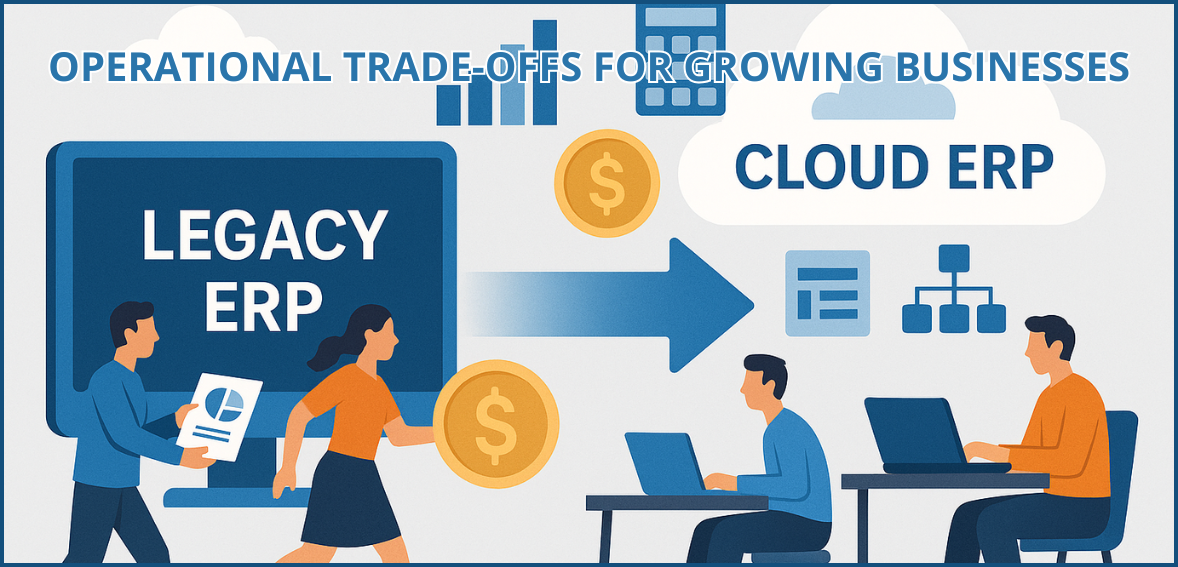
With the growth of organizations comes the growth of operational complexity at the same pace. The processes that were previously managed correctly with spreadsheets or basic accounting tools have reached a point where they are no longer efficient, they are error-prone, and not easy to scale. This is where the enterprise resource planning systems start to be discussed. The battle of cloud ERP vs legacy systems is a dilemma for many businesses.
Legacy ERP systems were intended to provide maximum uptime and control. They were usually hosted on-premises and heavily customized over the years. They might still be doing their job well, but they can be glassy in terms of changing the company direction and innovations. In contrast, the new cloud ERP systems are very much in demand by the majority of the companies that are growing because they show flexibility, access in real-time, and less infrastructure.
Nevertheless, the decision between Cloud ERP and legacy systems is not only confined to the technology sector but is an operational one. Cost, scalability, security, integration, and user experience are some of the factors that have a direct impact on daily business performance. Companies that are doing ERP systems for growing businesses need to understand these trade-offs very well.
This guide shows the comparison of cloud and legacy ERP models across key operational areas, which will make it easier for decision-makers to identify the most appropriate system for sustainable growth.
Understanding Cloud ERP vs Legacy Systems in Modern Operations
The main difference in cloud ERP vs legacy systems is the method of software deployment and maintenance. Legacy ERP solutions are usually installed on-site, and internal IT resources are responsible for at least part of the maintenance, which involves considerable costs.
The opposite is true for cloud ERP, where the provider takes care of hosting and supplying the software via the internet. Continuous updates, bug-fixes, and system performance are managed by the providers, allowing the internal IT team to focus on other tasks. This dissimilarity has an impact on the operational model of the firms every day.
When companies continue using outdated ERP systems, their processes are likely to be constrained as a result of heavy customization and restricted access to upgrades. In contrast, cloud-based systems are becoming more popular among enterprises as they enable quick adjustment to new requirements.
Grasping these operational foundations allows companies to evaluate their model options in light of their current structure and plans.
Cost Considerations in Cloud ERP vs Legacy Systems
The cost structure is one of the main operational trade-offs in cloud ERP vs legacy systems. Typically, the use of legacy ERP systems brings along quite a few high upfront costs like licensing, hardware, implementation, and customization, among others.
And then, the ongoing costs associated with legacy ERP systems will again be software maintenance, server upgrades, and internal IT staff. Moreover, these costs could be unpredictable at times due to the aging of the systems.
On the other hand, the cloud ERP solutions generally provide their services through a subscription model. The companies will be billed for the monthly and yearly fees, which are constant and include updates, support, and infrastructure. This embedded payment in the ERP structure is frequently easier for expanding companies.
In spite of the fact that cloud ERP may seem to be more economical at the beginning, organizations need to assess the total cost of ownership over time. The combination of predictability and reduced capital expenditure often makes cloud ERP an option that is financially attractive for companies focused on growth.
Scalability Trade-Offs in Cloud ERP vs Legacy Systems
When comparing cloud ERP vs legacy systems, scalability is a major factor to consider. Growing companies need systems that can manage more users, transactions, and data without causing any disruptions.
On the other hand, legacy ERP software cannot easily scale up. The inclusion of users or functionalities might lead to the need for more hardware to be installed, the system to be reconfigured, and a downtime that is prolonged. Such limitations can be serious attractors to growth that is already planned to be slow.
However, cloud ERP solutions have no such issues as they are built with the scalability feature that customers can demand. A company can add users, locations, or modules in a snap without having to carry out massive changes to the existing infrastructure. This very aspect of the cloud solution supports its clients who are experiencing rapid growth and want to extend their market reach.
For ERP systems that cater to growing businesses, the ability to scale impacts operational efficiency directly. Cloud ERP offers the agility that is needed to take advantage of growth opportunities without being restrained by the technology.
Deployment Speed in Cloud ERP vs Legacy Systems
In comparing cloud ERP vs legacy systems, deployment timelines are remarkably different. Hardware, customization, and internal testing can push legacy ERP implementations to be completed in months or even years.
These extended timelines not only slow down the realization of benefits but also disturb the running of businesses. The firms with legacy ERP software frequently face long transition phases during which productivity is reduced.
On the other hand, cloud ERP solutions come with faster deployment cycles. Thanks to the preconfigured modules and standardized processes, businesses can start operating within weeks and not months.
For the organizations reviewing ERP systems for their growing businesses, faster deployment implies faster access to insights, automation, and efficiency improvements. The time taken to get the value from the cloud ERP is considered a major operational advantage.
Maintenance and Updates in Cloud ERP vs Legacy Systems
When comparing cloud ERP vs legacy systems, system maintenance is one of the great disadvantages of cloud ERP. For instance, the legacy ERP software is still being updated, patched, and monitored daily with the internal IT staff’s intervention, which is a very time-consuming process.
These tasks not only increase the chance of system downtime but also consume manpower that could be used for strategic planning and other value-adding initiatives. Additionally, after a long period, the outdated systems may not comply with the current regulations and may even get hacked due to the lack of security measures.
With Cloud ERP solutions, updates and new features are automatically provided to the customers without any interruption in their daily activities. The vendors are the ones responsible for the management of systems’ performance, backups, and security across all their customers.
For the ERP systems that are meant for growing businesses, the decrease in maintenance means that the departments can concentrate on the main operations rather than on the upkeep of the systems. Hence, Cloud ERP literally turns IT maintenance into innovation.
Integration Capabilities in Cloud ERP vs Legacy Systems
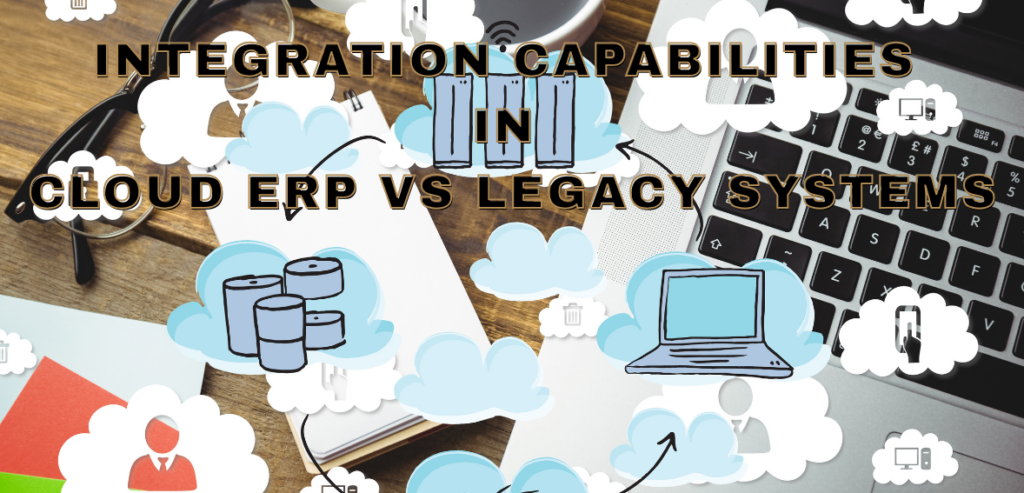
When it comes to evaluating cloud ERP vs legacy systems, integration becomes one of the primary factors contributing to operational efficiency. Legacy ERP systems usually require custom integrations that are quite costly and hard to manage in the long run.
Such integrations are likely to get disrupted with every update, thus causing data siloing and requiring manual workarounds. The modern cloud-based ERP systems come with APIs and native integrations that connect them to other tools, such as CRM, payroll, e-commerce, and analytics platforms.
The interlinking fosters uninterrupted data sharing among various departments. Integration flexibility for ERP solutions tailored for expanding businesses allows for automation and real-time insights. The systems of Cloud ERP are more capable of serving the digital ecosystems that are tightly connected.
User Experience Differences in Cloud ERP vs Legacy Systems
User experience is an important aspect that is frequently ignored in comparing cloud ERP to legacy systems. However, it has a direct effect on both productivity and acceptance. Legacy ERP systems involve very difficult and non-intuitive user interfaces most of the time.
The training needed for the legacy ERP software can be huge, resulting in a slow onboarding process and an increase in mistakes. Workers might not be willing to cope with using systems that seem to be old-fashioned.
Cloud ERP systems put a lot of stress on modern design, role-based dashboards, and mobile access. This leads to better usability and habitual use as well.
In the case of ERP systems for growing businesses, a nice user experience means more productivity and quicker decision-making. Cloud ERP systems are more in sync with modern-day workforce expectations.
Security and Compliance in Cloud ERP vs Legacy Systems
Security issues are one of the major factors that can affect the choice of cloud ERP vs legacy systems or vice versa. The whole burden of security is borne by the organization when it comes to legacy ERP software. Patching and updating for compliance are all part of the organization’s responsibility.
This could prove to be difficult for small and medium-sized firms that are expanding and have few resources for IT. As a result of this security measure, the organization might become less secure over time.
The main trend across different industries is to Cloud ERP solution since they are the most reliable and secure IT solutions for businesses. The cloud service providers usually put more emphasis on security than the customers, which is why they are trusted by the majority of customers.
In the case of an ERP system for a growing company, the shared responsibility model of cloud ERP lowers the risk and increases resilience. Cloud vendors frequently provide a security level that is beyond the capabilities of single enterprises.
Data Access and Reporting in Cloud ERP vs Legacy Systems
Timely access to data is considered very important in cloud ERP vs legacy systems evaluations. Legacy ERP software can restrict the reporting capabilities or make it necessary to extract the data manually.
Decision-makers who depend on outdated reports might get insights that are either delayed or incorrect. Consequently, this leads to longer response times.
Cloud ERP systems give instant access to dashboards, analytics, and reporting tools, no matter the location. In this way, it is possible to make quicker decisions that are backed by data.
For ERP systems that cater to expanding companies, real-time visibility has a positive effect on forecasting, inventory management, and financial control. Cloud ERP boosts the transparency of operations by constructing a complete payment processing guide.
Customization Flexibility in Cloud ERP vs Legacy Systems
Customization is frequently referred to in cloud ERP vs legacy systems debates. Legacy ERP software gave room for extensive modifications. However, this came with the price of being complicated and facing difficulties during upgrades. Excessive customizations can trap organizations in the past with outdated processes and thus hinder the system’s growth.
Cloud ERP applications prefer configurations to serve as their main form of modification instead of heavy customization. The use of standardized best practices leads to a reduction in complexity, but at the same time, it still provides the customer with a degree of flexibility.
For the ERP systems designed for growing companies, the configurable cloud ERP systems offer the right mix of adaptability and long-term maintainability. This method will allow the company to grow without the burden of technical debt.
Reliability and Downtime in Cloud ERP vs Legacy Systems
System reliability is a major factor that affects operations in cloud ERP vs legacy systems. The use of legacy ERP software relies on the internal infrastructure, thus making it susceptible to hardware and power failures. The interruption of service can stop operations and impair the quality of customer service.
Cloud ERP providers utilize redundant infrastructures with high availability guarantees. Cloud vendors support and/or offer service-level agreements that ensure a given level of uptime.
For startup companies, reliability in the ERP system is a must-have. A cloud ERP solution will reduce disruption and help maintain operations continuously, no matter where the location or what time zone.
Conclusion
The choice of cloud ERP vs legacy systems is not just a technology decision. It strategically determines how a business will operate, scale, and compete. Legacy ERP software might be comfortable and give the user full control, but it also represents a situation of less agility and even higher operational burden as time goes by.
On the other hand, the Cloud ERP providers are giving the benefits of scalability, quicker deployment, lower maintenance, and better integration. Thus making them the choice for modern organizations. For those companies that are weighing the options of ERP systems for the rapidly growing business, the cloud is the best fit, closely matching the growing operational needs.
In the end, the right choice will come down to growth targets, in-house expertise, and the company’s future vision. Companies that are focusing on flexibility, efficiency, and innovation are seeing more and more that cloud ERP is providing them with the operational base needed for success that is not only sustainable but also everlasting.
FAQs
What is the main difference between Cloud ERP and legacy systems?
The primary difference in cloud ERP vs legacy systems is the deployment-method. This is because cloud ERP is online, while legacy ERP applications are based on-premises.
Are growing companies better off with cloud ERP solutions?
Definitely, ERP solutions provided through cloud computing can be regarded as the most suitable alternatives for companies with growth potential. These have advantages such as being able to grow with the business, being deployed faster, and incurring lower maintenance costs in general.
What are the reasons for companies to abandon their legacy ERP software?
It is a simple fact that all companies would choose to switch from using old ERP software to brand new software in an attempt to cut the costs of support as well as capitalize on the use of new technology.
In what ways do ERP systems for growing firms facilitate scalability?
Firms with ERP systems for growth facilitate scalability through user-friendly enlargement, system upgrades, and integration without significant infrastructure changes.
Is data protected in cloud ERP solutions?
Cloud ERP solutions give a guarantee of business data protection by implementing cutting-edge security measures, performing regular updates, and adhering to security regulations.